


How to Choose a Portable Power Station for Your Home
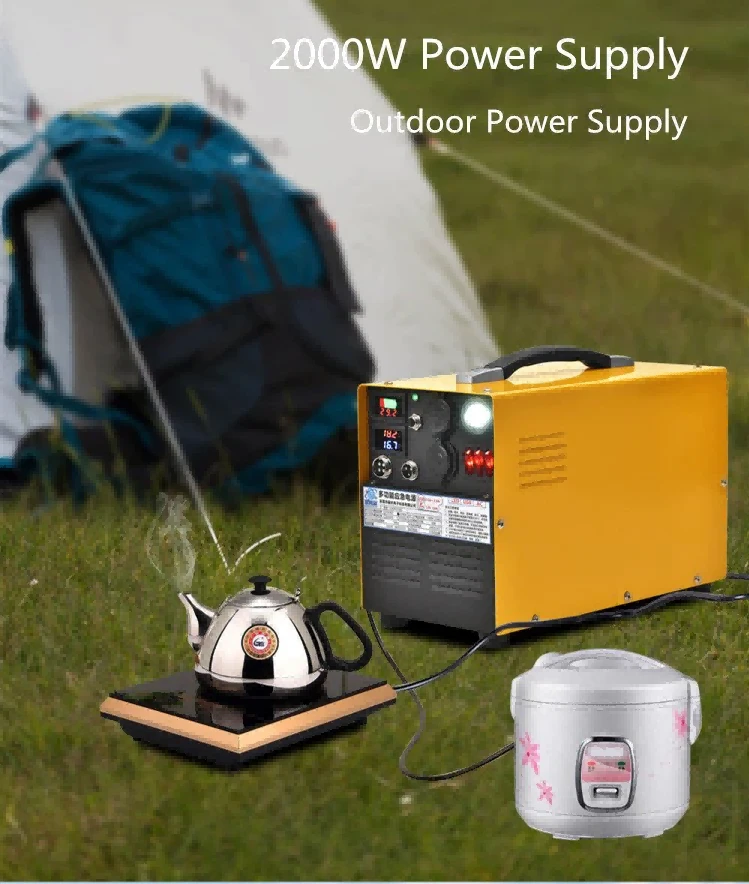
What is the most important function of a home battery backup system?
There are several key features to consider before purchasing. These factors will determine how well the device will work in your home and what it's worth for your money.
1. Battery capacity
This is one of the most important features, as this determines how long you can use the power station before needing to recharge. Capacity is measured in "watt-hours," which tell you the maximum number of watts the power station can support per hour before it needs to be recharged.
Keep in mind that household appliances typically consume more watts per hour than small devices like cell phones or tablets. So you'll need more battery capacity to power your home than you would in other situations like camping. You should plan on getting at least 3,000 watt-hours of capacity to make sure everything runs smoothly.
Calculate the appliance wattage for major appliances in your kitchen, living room, and bedroom to figure out how much battery capacity you need so you can see how much you can power and for how long. This will ensure you don't run out of juice anytime soon.
2. Output
Each individual port on the power station will have a maximum output level. You need to make sure that any device plugged into the port does not exceed the output of that port.
For example, if a port has a maximum output of 100W and your refrigerator requires 150W, you cannot plug it into that specific port.
You want to make sure you can safely plug as many devices into your power station as you need. Again, since you may be running multiple large appliances at the same time, get a power station with sufficient output wattage.
3. Direct charging
This allows you to charge the power station while charging your device. Drive-thru charging is an invaluable feature during a power outage, as it prevents downtime while you're at the power station waiting to charge.
Portable power stations that support AC and solar pass-through charging are better because the charging time is significantly faster.
4. Pure sine wave inverter
This ensures a pure, uninterrupted sine wave current from the power station. This will protect your device from overheating and prevent power surges.
5. Outlet
The number and type of outlets available for a portable power station can also affect its usefulness. Look for models with ample USB ports, AC outlets, DC power ports, and other outlet types so you can charge multiple devices at once.
6. Device Compatibility
Some models have built-in connectors designed for certain types of electronics, such as Apple products. Make sure these match the type of equipment you plan to power.
8. Security Features
Make sure your power station is equipped with surge and short-circuit protection to help prevent potential electrical hazards from overloading, accidental misuse, or equipment failure.
9. Dimensions and weight
It is important to consider how often you will need to transport your power station. Heavier units tend to be less portable, but offer higher battery capacity. Lighter ones may sacrifice some capacity, but are easier to carry.
10. Construction
Good construction is essential if you plan to use your power plant outdoors in all weather conditions, including rain, snow, and dust. Make sure the model you choose is built with high-quality materials, such as an aluminum alloy casing that helps prevent water damage.


