


What are Microinverters – Basic Definition and Applications
A microinverter is essentially a small solar inverter, but instead of handling the output of multiple modules simultaneously, it handles the output of a single module (or a small group of modules). In traditional systems, solar panels are connected in series ("strings"), and the DC output of the entire string flows into a centralized inverter. With microinverters-or more broadly, with module-level power electronics (MLPE) technology-each module is handled independently.
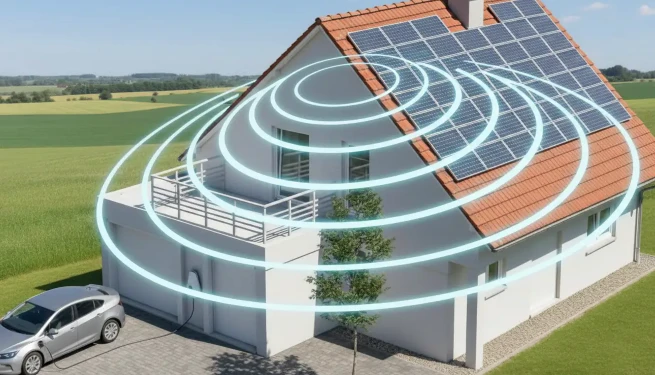
This architecture means that:
DC-to-AC conversion occurs at (or very close to) the individual solar module.
The output of each module is independent of the output of its neighboring modules.
The AC wiring from the modules connects directly to the building or grid, rather than transmitting high-voltage DC over long distances.
Because of this, microinverter systems behave quite differently from traditional string inverter systems, and are often more flexible.
How Microinverters Work
The principle behind microinverters is their ability to perform DC-to-AC conversion directly at the solar panel. When sunlight hits a solar panel, it generates DC electricity. The microinverter connected to that panel immediately converts the DC electricity to AC electricity, which is then sent through standard AC wiring to your electrical panel.
This panel-level conversion has a fundamental advantage: each solar panel operates independently. Even if one panel is shaded, dirty, or experiences any performance issues, it will not affect the output of the other panels in the system. This is in stark contrast to string inverter systems, where the performance of the entire array can be limited by the worst-performing panel-a phenomenon known as the "Christmas light effect."
Because each module operates independently, the performance of one module does not drag down the performance of the others. This is the core advantage of the microinverter architecture.
Main Advantages of Microinverter Systems
Enhanced Energy Production
Microinverters equip each solar panel with Maximum Power Point Tracking (MPPT) technology. MPPT continuously adjusts the voltage and current based on real-time conditions such as temperature, shading, and light intensity to extract the maximum power. Modern microinverters boast MPPT (Maximum Power Point Tracking) efficiency exceeding 99%, ensuring optimal energy harvesting throughout the day.
In practical applications, this translates to significant energy gains. Studies show that for systems affected by partial shading (which accounts for approximately 85% of residential installations), using microinverters instead of string inverters can reduce power losses from 7% or more to extremely low levels.


