


Why is compression so important in lithium-ion batteries?
Lithium-ion battery cells change during cycling. Battery compression can prevent various defects, such as swelling.
The main causes of cell swelling can be categorized into two main types: changes in the thickness of the battery electrodes (during use); and gases generated by the decomposition of oxygen in the electrolyte.
Compression can smooth the migration paths within the battery, allowing the positive and negative electrodes and separator to fit more closely together. This reduces the porosity between the materials, thereby increasing the transfer rate of electrons and ions between the electrodes and reducing internal resistance. (Note: Excessive pressure can also increase the potential for internal resistance, so a certain amount of pressure is required.)
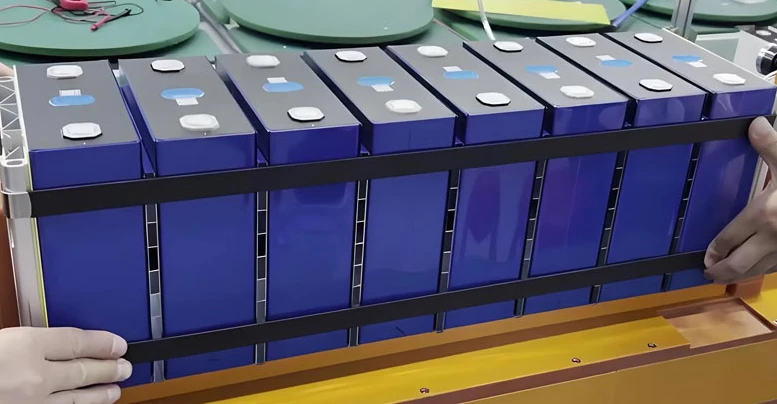
Regarding changes in electrode thickness, lithium batteries experience significant changes in thickness during use, especially for graphite negative electrodes. Lithium batteries are prone to swelling after high-temperature storage and cycling, with thickness increases ranging from 6% to 20%. The positive electrode has a relatively low expansion rate of only 4%, while the negative electrode expands by over 20%. This is because the lithium insertion process in the negative electrode graphite forms LiCx (such as LiC24, LiC12, and LiC6), causing changes in the lattice spacing and generating microscopic internal stress, which in turn causes the negative electrode to expand.
After battery assembly, a small amount of gas is inevitably generated during the pre-formation process, which is one of the sources of irreversible capacity loss in the battery cell. During the initial charge and discharge process, electrons undergo redox reactions with the electrolyte on the negative electrode surface, generating gas and forming an SEI film on the graphite negative electrode surface. As the SEI film thickness increases, electrons cannot penetrate it, thereby inhibiting further oxidative decomposition of the electrolyte. However, during battery use, internal gas generation gradually increases due to impurities in the electrolyte or excessive moisture within the battery. Furthermore, overcharging, over-discharging, and internal short circuits can accelerate gas generation, leading to battery failure.
For safety reasons, pressure is applied to force the gas to the top, and the safety valve opens when the pressure reaches 0.6 MPa.


